


Protecting Bangladesh’s natural fish stocks and aquatic ecosystems must be part of the country’s sustainable aquaculture agenda.
Bangladesh is a country deeply connected to water. Its rivers, canals, floodplains, wetlands, haors and beels have historically supported an extraordinary diversity of fish and other aquatic life. These natural water bodies are not only ecological assets; they are an important part of the country’s food security, rural livelihoods and aquatic economy.
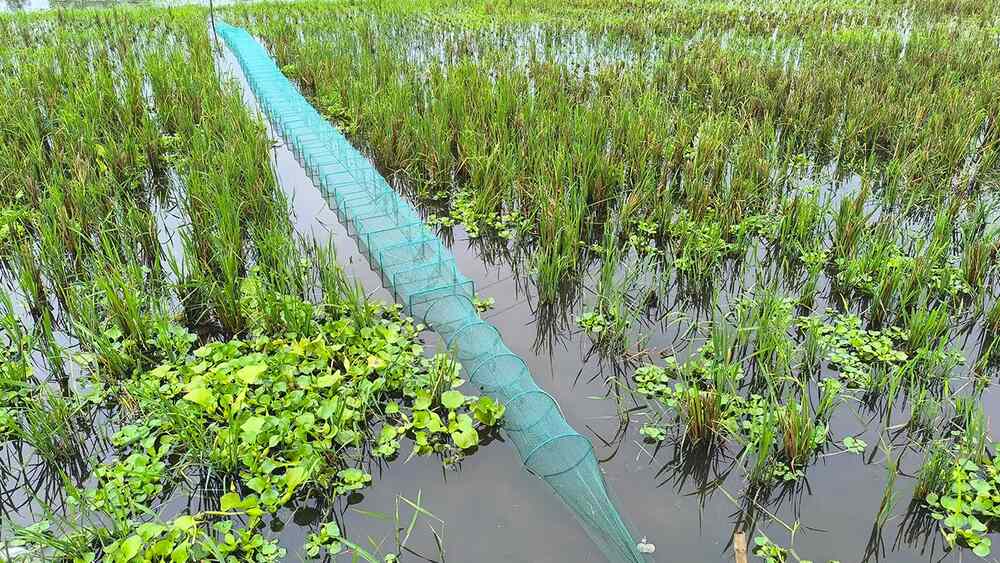
Yet, across the country, an increasingly common fishing practice is putting this natural resource base under growing pressure: the use of China Duari nets, also known as China Ring nets.
For FISHBYTE, this is more than an issue of illegal fishing gear. It is a question of how we protect the natural resource base upon which Bangladesh’s fisheries and ultimately its broader blue economy, depend.
A net that catches far more than fish
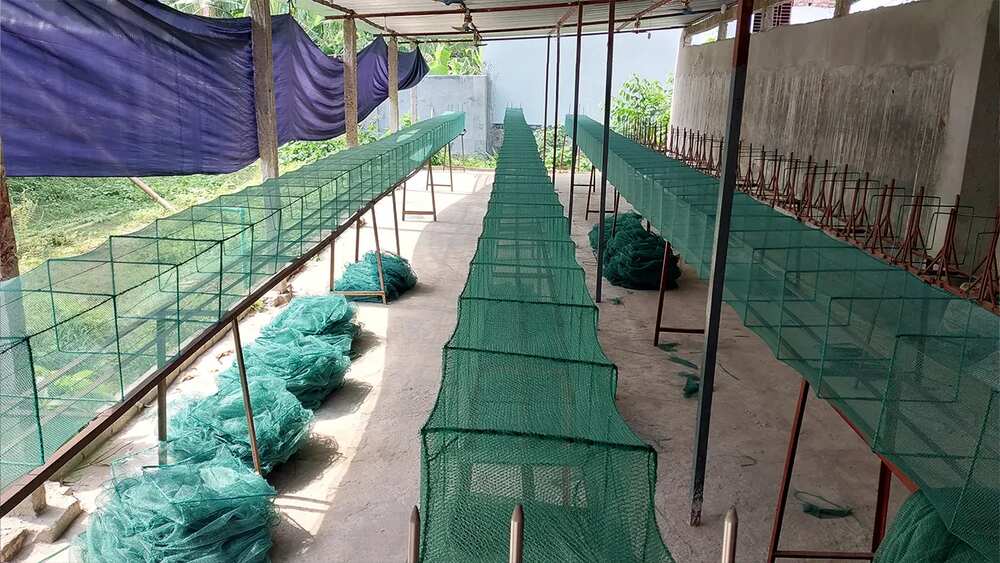
China Duari nets are trap-like fishing net fitted with a series of rings and openings through which aquatic animals enter but have difficulty escaping. Its fine mesh and design make it highly non-selective.
As a result, the problem is not simply the removal of marketable fish.
Fish fry, juveniles, small native species and a range of other aquatic organisms can also become trapped. Amphibians, reptiles and other aquatic fauna may be caught alongside fish.
When such gear is used extensively across natural water bodies, the consequences can extend beyond an individual fishing trip. Removing juvenile fish before they reach maturity can reduce the natural replenishment of fish populations. Repeated pressure on breeding populations can further weaken the resilience of already stressed aquatic ecosystems.
In other words, we may be catching today’s fish at the cost of tomorrow’s fish.
An enforcement challenge in the age of social commerce
The growing availability of China Duari nets makes the challenge even more difficult.
These China Duari nets are reportedly being promoted and sold through physical shops as well as Facebook pages, YouTube channels and other social-media-based networks. Buyers can often place orders through mobile numbers or messaging applications, with delivery arranged through courier services.
This creates a problem that cannot be solved through occasional field-level enforcement alone.
The entire supply chain from production and distribution to retail and online promotion, needs greater attention.
Bangladesh already has a legal framework for protecting its fisheries resources. The Protection and Conservation of Fish Act, 1950 provides the government with authority to prohibit or regulate the erection and use of fixed fishing engines, while the associated rules provide broader measures for the protection and conservation of fish.
The Department of Fisheries has also recognized the importance of preventing fishing practices that threaten fish stocks and aquatic ecosystems. Bangladesh’s national action plan on illegal, unreported and unregulated fishing identifies the protection of aquatic biodiversity and the long-term sustainability of fish stocks as important national priorities.
The challenge, therefore, is not necessarily the absence of a regulatory framework. The challenge is ensuring that the framework works effectively on the ground, and increasingly, online.
Sustainable aquaculture cannot exist in isolation
This is where FISHBYTE sees a broader connection.
Aquaculture is often discussed primarily in terms of increasing farm productivity: better seed, better feed, improved water management, disease prevention, technology adoption and access to better markets.
All of these are important.
But sustainable aquaculture cannot be separated from the health of the natural aquatic environment around it.
Healthy rivers, wetlands, canals and floodplains contribute to natural fish recruitment, biodiversity and ecological resilience. They are part of the wider aquatic ecosystem in which Bangladesh’s aquaculture and fisheries sectors operate.
For FISHBYTE, increasing aquaculture productivity while allowing natural fish stocks and aquatic biodiversity to deteriorate would not constitute a truly sustainable aquatic economy.
We therefore believe that responsible aquaculture must go hand in hand with responsible fishing, habitat protection and conservation of natural aquatic resources.
From protecting natural stocks to replenishing them
FISHBYTE’s broader vision is to contribute to a more productive, climate-resilient and technology-enabled aquatic economy in Bangladesh.
An important part of that vision is recognizing that production and conservation are not opposing objectives.
They should reinforce each other.
While farmers need better access to quality seed, responsible inputs, knowledge, technology and markets, Bangladesh also needs healthier natural ecosystems and stronger populations of native fish and other aquatic species.
That is why FISHBYTE intends to increasingly engage in activities that support natural fish-stock replenishment, aquatic biodiversity conservation and responsible resource use alongside our work in aquaculture.
We believe the future of Bangladesh’s aquatic economy should not depend solely on how much we can produce artificially. It should also depend on how well we protect and restore the natural systems that have sustained our people for generations.
This is not about stopping fishing. It is about stopping destructive fishing.
An important distinction needs to be made.
Fishing is a legitimate livelihood for millions of people and an important part of Bangladesh’s rural economy. The objective should not be to undermine fishing communities or their livelihoods.
The objective should be to prevent destructive and indiscriminate fishing practices that undermine the very resource on which those livelihoods depend.
That requires cooperation among government agencies, law-enforcement authorities, fishing communities, farmers, local administrations, businesses, civil society and digital platforms.
Manufacturing and commercial distribution of prohibited fishing gear must be addressed. Enforcement must reach both physical markets and online marketplaces. At the same time, fishing communities need awareness, practical alternatives and meaningful participation in conservation efforts.
Protecting tomorrow’s fish
Bangladesh has made significant progress in fish production and has enormous potential to develop a stronger and more sustainable blue economy.
But production statistics alone cannot tell the whole story.
A truly sustainable aquatic economy must ask a more fundamental question:
Are we leaving enough healthy aquatic ecosystems and natural fish stocks for the next generation?
The answer depends on the choices we make today.
For FISHBYTE, protecting natural fish stocks and aquatic biodiversity is not separate from our work in aquaculture. It is part of the same mission.
We want to see Bangladesh produce more fish, but we also want to see our rivers, wetlands and natural waters continue to produce fish naturally.
Because a sustainable aquatic economy cannot be built by increasing production while allowing the natural resource base to disappear.
Protect what remains. Restore what has been lost. And build an aquatic economy that can thrive for generations.